I was driving home the other night, just randomly flipping through radio stations, and an old Johnny Cash track came on. You know the exact kind—just raw gravel, an acoustic guitar, and pure heartbreak. It hit me pretty hard, mostly because you could hear the actual miles in the guy’s voice. We’re sort of wired from birth to connect with that kind of lived-in pain. We’ve always just assumed that songwriting was this sacred, purely human territory where you needed a pulse and maybe a couple of bad breakups to write anything genuinely worthwhile.
But fast forward to right now, and the whole music scene is suddenly looking over its shoulder. Artificial intelligence is opening the studio doors wide. And I don’t mean basic auto-tune plugins or simple drum loop generators, either. I’m talking about massive networks of code spitting out entire verses and choruses, actively trying to play the poet. It’s making a lot of folks in the industry sweat bullets.
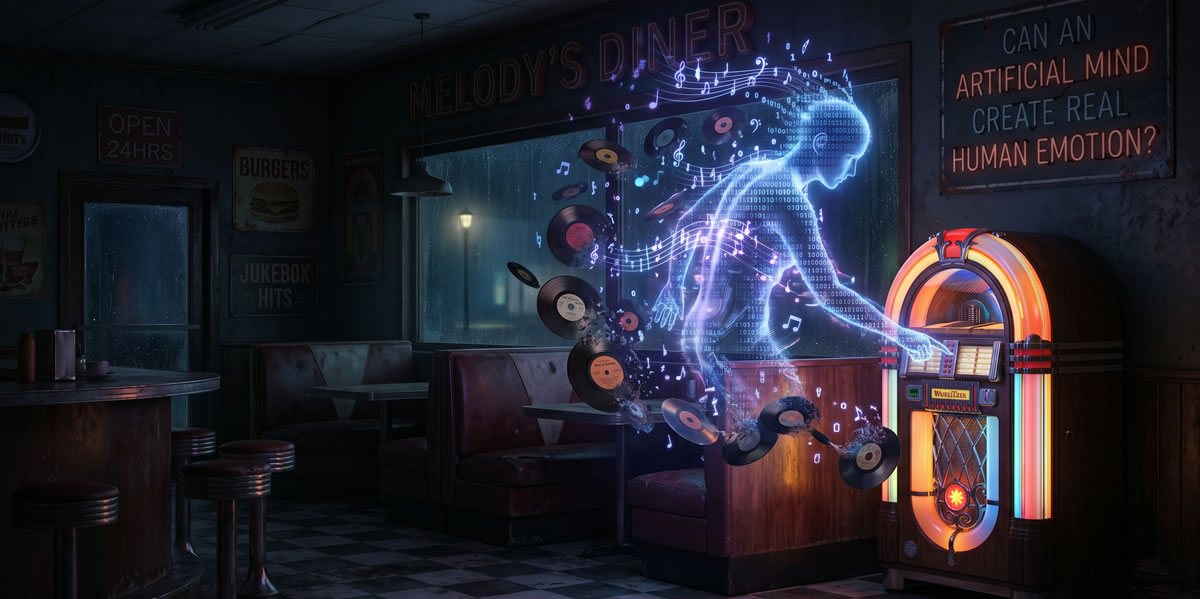
The jump in what these systems can accomplish lately is, frankly, a bit remarkable. If you look under the hood, these models have basically swallowed the entire internet whole. They’ve read every poem, analyzed every single pop hit from the last fifty years, and mapped out exactly how human beings talk to each other. People are using them for literally everything right now. You’ve got guys coding whole websites in minutes, folks drafting those tedious office emails, and yeah, some pretty out-there niche entertainment stuff too.
Honestly, whether someone is looking for a bland corporate spreadsheet formula or an ai erotic story here www.novelx.ai, the machine just shrugs and strings the right words together in seconds. But there’s a massive, glaring gulf between generating a technically correct paragraph and writing a lyric that makes someone want to pull their car over and cry. It’s one thing to mathematically mimic the structure of a Bob Dylan track. It’s another thing entirely to fake the soul behind it. So, let’s unpack what’s really happening when the algorithm tries to get emotional.
Underneath the Hood of the Hitmaker
To figure out if we’re all doomed or just upgrading our toolset, you have to look at the actual mechanics of it all. These AI music models aren’t sitting around in dimly lit rooms waiting for a muse. They’re built on Large Language Models. In plain English? They are essentially massive, hyper-fast prediction engines.
If you type in a prompt like “write a sad breakup song about a rainy Tuesday,” the system instantly scrubs through decades of existing lyrics. It figures out that words like “cry,” “goodbye,” and “gray sky” usually hang out together. The result you get back isn’t actually feeling anything. It’s just really, really good at guessing what word logically comes next. Sure, the output is surprisingly solid half the time. It can even be catchy. But calling it art feels a bit weird, right? It’s more like a highly sophisticated parlor trick.
The Messiness of Real Life
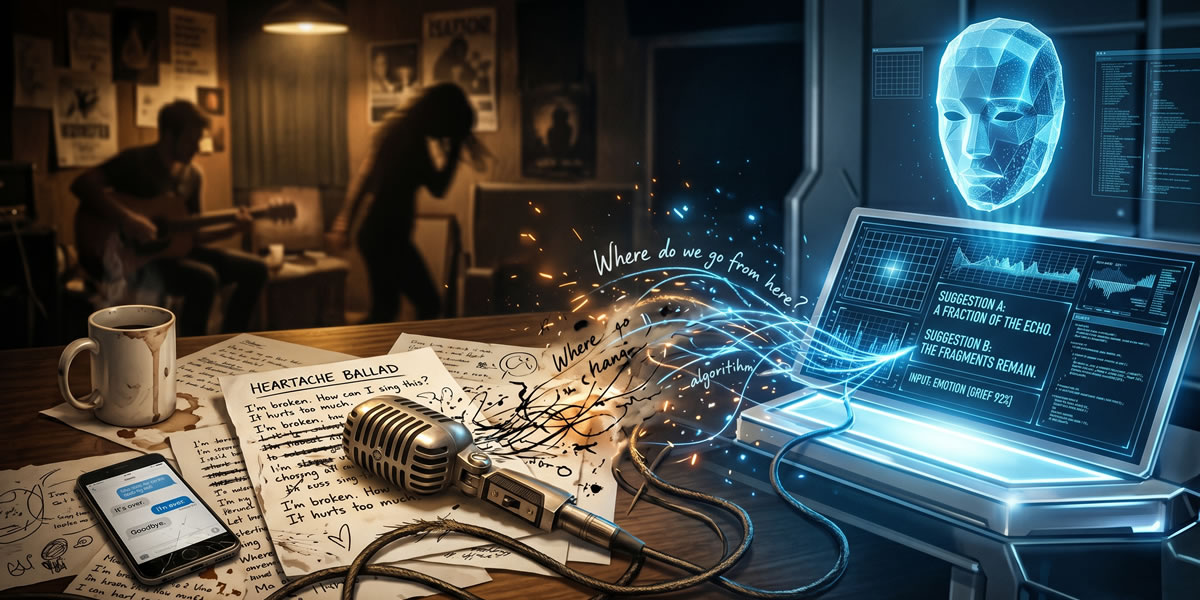
Here is exactly where the code usually trips over its own feet. A perfectly rhymed verse doesn’t automatically mean it’s a good song. Some of the most iconic lyrics out there are actually kind of clunky. They don’t rhyme perfectly. Sometimes they don’t even make logical sense. But they work because human lives are chaotic.
A machine doesn’t know what it feels like to lose a childhood friend or get dumped via text message on a Tuesday morning. When an algorithm spits out a lyric about missing someone, it’s basically just wearing a mask. It’s a simulation of grief. And listeners are way smarter than record executives give them credit for. We have this weird, built-in radar for authenticity, and we can almost always smell it when the grit and the dirt are missing from a vocal track.
The Ultimate Co-Writer?
Does this mean human songwriters are going extinct? Honestly, I really don’t buy it. The doom-and-gloom takes you to see popping up all over Twitter, totally missing the reality of how studios actually operate. The smart artists are already treating AI like a weird, tireless co-writer.
Stuck on a bridge? Let the algorithm throw twenty wacky ideas at you. Need a bizarre rhyme for a specific word that kind of works? Boom, done. It’s a tool. It reminds me a lot of when synthesizers first showed up in the 80s and the purists thought “real” music was dead. Instead, musicians just found a way to use the new toy to invent entirely different genres.
The Final Note
The music landscape is definitely getting weirder. We’re going to see an absolute flood of AI-generated tracks hitting Spotify and Apple Music in the coming years. That’s just a given at this point. A few of them might even sneak onto the Billboard charts because, let’s be real, pop music has always loved a predictable formula.
But those songs that stick with you for twenty years? The ones you play at weddings, or the ones that get you through a tough time? Those require a heartbeat. Code can easily fake the rhythm and the rhyme, but the blood, sweat, and tears are going to have to stay strictly human.