Have you ever watched an obscure indie track explode on TikTok overnight and wondered how the artist’s management knew exactly which country to tour first? It looks like magic from the outside. Or maybe just incredibly good luck. We tend to picture A&R reps sitting in cool downtown offices, passively listening to demos and waiting for a hit to fall into their laps.
But the reality of the modern music business is way less glamorous and a lot more data-driven. It’s actually a massive game of digital espionage. The people pulling the strings aren’t just relying on their ears anymore; they are relying on relentless streams of localized internet data to figure out exactly what teenagers in São Paulo or underground club-goers in Berlin are listening to on a random Tuesday night.

The problem, however, is that the internet you see isn’t the same internet someone across the world sees. Algorithms constantly feed us localized, filtered content. So, if a label executive in London wants to see the raw, unfiltered streaming charts in South Korea, or test how a local ad campaign is actually looking on a regional platform, they can’t just type in a URL. They usually get blocked, or worse, quietly redirected to the UK version of the site without even realizing it.
To get around this invisible wall, the industry relies heavily on complex server routing—essentially masking their physical location to browse the web exactly like a resident would. It’s a fascinating, slightly hidden layer of music marketing, and if you’re curious about the technical side of how analysts manage these global connections, you can learn more about the specific routing setups they use. Because without that raw access, labels are basically flying blind.
Escaping the Local Bubble
Think about your own Spotify or Apple Music homepage for a second. It’s an echo chamber built specifically for you and your zip code. Now imagine trying to break a new artist globally using only that highly skewed perspective. It’s practically impossible.
When management teams are pushing a track, they need to verify if their song is actually getting featured on local indie playlists in Mexico City, rather than just waiting a week for a delayed analytics spreadsheet. They have to physically—well, digitally—be there. By dropping their IP address right into the target city, label marketers can scrape accurate, real-time data on playlist placements, keep an eye on local competitor trends, and even check what regional YouTube videos are being suggested next to their artist’s music. They need to see the digital environment exactly as the local fans see it.
Why the “Global Release” is Actually a Myth
Back in the day, a record label would just drop an album worldwide, shoot off a press release, and hope for the best. That strategy is completely dead today. Right now, a song might be pushed as an alt-pop track in the US, but actively marketed as an electronic club mix in Eastern Europe.
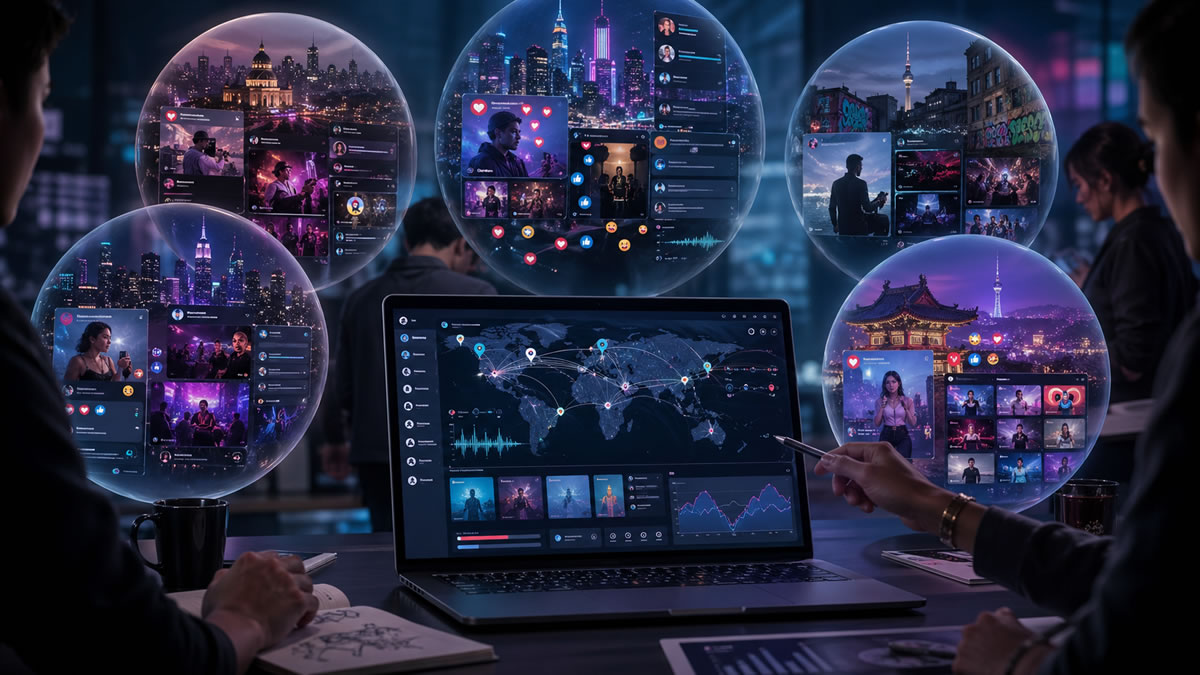
You simply cannot coordinate that kind of hyper-localized marketing campaign if you are locked out of the region’s internet. Promoters have to check local forums, underground blogs, and regional social media networks that frequently geo-block foreign traffic entirely. They aren’t just looking at the big streaming numbers; they are hunting for cultural context. What specific memes are attached to the sound? What local influencers are making videos with it? You can’t see the full, messy picture if a local firewall is constantly shutting you out.
The New A&R Toolkit
The music industry has always been a weird, chaotic mix of raw art and cold commerce. But the balance has definitely shifted behind the scenes. A great hook, authentic lyrics, and a charismatic singer are obviously still required. But finding a paying audience for that singer? That’s all about the digital infrastructure.
The next time you see an underground track seemingly take over the world out of nowhere, don’t just assume the algorithm did it naturally. Chances are, there’s a team of data nerds sitting behind a wall of masked servers, quietly tracking every single click halfway across the globe before the song even hits your radar.